A passport photo is refused on geometry and image quality far more often than on anything subjective. That is good news: nearly every common fault is something you can see yourself in the picture before you send it, if you know what you are looking at.
Below are the faults that actually cause refusals, roughly in order of how often they come up, each with what the rule is and how to fix it. The examples are all the same portrait, altered one property at a time, so you can see the defect in isolation.
Seen side by side
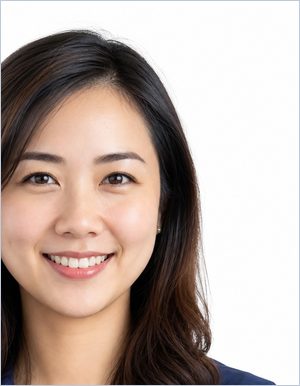
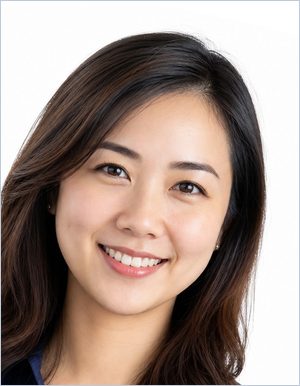
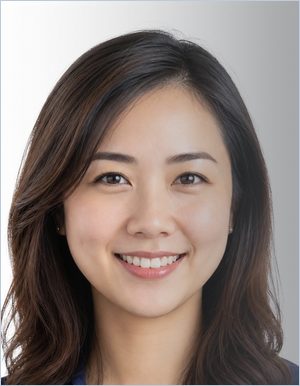
Two frames that pass and six single-fault variants that do not, all at 35 x 45 mm — the format used across the Schengen area, the UK, Australia, Japan and much of the world. Note that "accepted" is a range, not one exact crop: the head may sit anywhere in the 32–36 mm band, and both frames below are inside it.
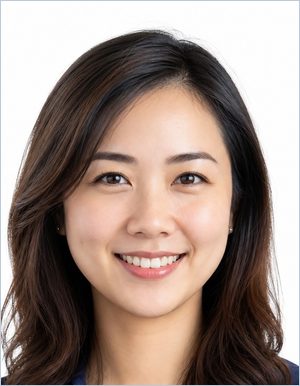
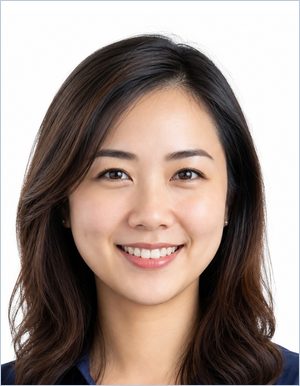
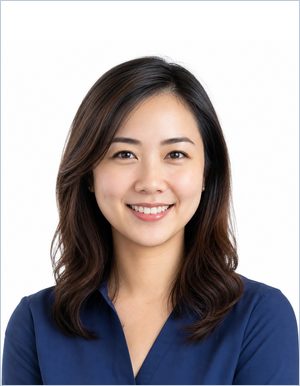
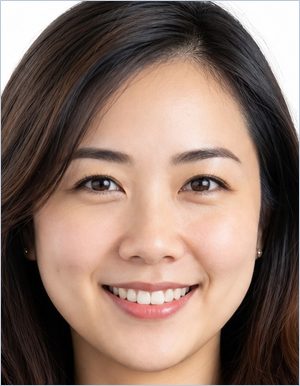

1. The head is the wrong size in the frame
This is the single most common mechanical failure, and the least intuitive: it is not about the photo's size but the proportion of it your head fills. Authorities specify a chin-to-crown measurement, and both directions fail. Too small and the face carries too little detail for biometric comparison; too large and the crown of the head gets cut off.
The required figure differs by country far more than people expect. On a 35 x 45 mm photo the Netherlands wants a 26–30 mm head, while Germany and the Schengen standard want 32–36 mm — the same outer size, a visibly different crop. A photo made correctly for one is rejected by the other.
Fix: use the preset for the exact document you are applying for rather than a generic "passport photo" crop, and check the head sits between the guide lines.
2. The background is not plain, or has a shadow on it
Most standards ask for a plain, light, uniform background — white or off-white for the U.S., light grey for several European authorities. What trips people up is rarely the colour: it is a gradient. Standing close to a wall with a single light source throws a soft shadow behind your head and shoulders, and that shadow makes the background non-uniform even though the wall is white.
Fix: stand at least an arm's length away from the wall, and light your face from the front rather than from one side. Daylight through a window facing you works well. If the background still has a shadow, replacing it is an option for most documents — but not for U.S. online passport renewal, which rejects digitally altered backgrounds outright.
3. Glare on glasses, or glasses at all
Rules genuinely diverge here, so check yours rather than assuming:
- United States: glasses have not been permitted in passport photos since November 2016. Take them off. A narrow medical exception exists and needs a signed doctor's statement.
- United Kingdom and much of Europe: glasses are allowed, but the eyes must be clearly visible — no glare on the lenses, no tinted or reactive lenses, and frames must not cover the eyes. Removing them is the safer choice even where they are allowed.
Fix: if you must keep them on, tilt the head very slightly or move the light off-axis to kill the reflection, and confirm both pupils are plainly visible.
4. The head is tilted or turned
The requirement is a full-face, front-on view with the head square to the camera — not the flattering three-quarter angle people naturally adopt. A tilt of a few degrees is usually tolerated; the ten-to-fifteen degree lean that feels natural in a selfie is not.
Fix: look straight down the lens with your shoulders level and your ears roughly symmetric in the frame. Putting the camera at eye height helps more than anything else — held low, it induces both a tilt and a distorted jawline.
5. Not centred
The face must be centred horizontally, with the eyes inside a specified band vertically. An off-centre crop fails even when the head size is right, and it is an easy fault to introduce while cropping a photo by hand.
Fix: centre on the midline between the eyes rather than on the nose or the visual centre of the hair, which pulls the crop sideways when hair is asymmetric.
6. Blur, low resolution, or heavy compression
A printed ID photo needs roughly 300 dots per inch at its final size, which for a 35 x 45 mm photo means about 413 x 531 pixels of genuine detail. Enlarging a small crop from a group photo cannot create that detail. Blur from camera shake or a missed focus fails for the same reason, as do the smeared artefacts of a heavily compressed image passed through a messaging app.
Fix: shoot for the purpose, in good light, from about an arm and a half away, and transfer the original file rather than a version that has been through chat. Export at 600 DPI if the option exists — it costs nothing.
7. Expression and mouth
Another rule that genuinely differs by country, and a frequent source of confusion:
- United States: a neutral expression or a natural smile is acceptable.
- United Kingdom, Schengen area and most biometric standards: neutral expression, mouth closed. A smile showing teeth is a refusal.
Fix: unless you are certain your authority permits a smile, keep a relaxed, neutral face with your mouth closed and both eyes open.
8. The photo is too old
Most authorities require a photo taken within the last six months, and will refuse one that no longer resembles you — after a significant change in appearance, or for a child who has visibly grown. For children the effective window is much shorter than six months.
Fix: take a new one. It is a five-minute job and cheaper than a refused application.
9. Things that should not be in the picture
Reliable refusals, all easily avoided: sunglasses; headphones or earbuds; a hat or cap (religious head coverings are permitted, provided the face is fully visible from the bottom of the chin to the top of the forehead); a uniform; a hand or a second person in frame — a particular hazard in infant photos; a busy patterned top that reads as background clutter; heavy shadow across one side of the face.
Before you submit
Look at the photo at full size and ask, in order: is the whole head visible with the crown inside the frame; is the background even, with no gradient behind the shoulders; are both eyes clear and unobscured; is the head straight and centred; is it sharp at 100%; does the expression match what your authority requires. Six checks, about a minute.
Then crop it to the exact format for your document with the correct head height applied for you:
Frequently asked questions
What is the most common reason a passport photo is rejected?
Incorrect head size within the frame — the chin-to-crown measurement falling outside the range the authority specifies. It is the most common because the required figure differs between countries that use the same outer photo size: a 35 x 45 mm photo needs a 26-30 mm head for the Netherlands but 32-36 mm for Germany.
Can I fix a rejected passport photo, or do I need a new one?
It depends on the fault. Wrong head size, an off-centre crop or a wrong print size can be fixed by re-cropping the original file. Blur, low resolution, glare on glasses, a tilted head, a shadowed background or a wrong expression all require a new photograph — no amount of editing reliably repairs them, and for U.S. online renewal editing the background is itself grounds for refusal.
Does a shadow on the background really cause rejection?
Yes, it is one of the commonest refusals. The requirement is a uniform background, and a shadow makes it non-uniform even on a white wall. Standing an arm's length away from the wall and lighting your face from the front rather than the side prevents it.
Can I smile in a passport photo?
It depends on the country. The U.S. Department of State accepts a neutral expression or a natural smile. The UK, the Schengen countries and most other biometric standards require a neutral expression with the mouth closed, and a smile showing teeth is refused. Check your own authority before smiling.
Are glasses allowed in passport photos?
Not for U.S. passport photos — they have been prohibited since November 2016, with a narrow medical exception requiring a doctor's note. The UK and many European authorities do allow them provided the eyes are clearly visible with no glare, no tint and no frames obscuring the eyes. Removing them is the safer option wherever it is permitted.